Is the Sojag Messina 10 x 10 Gazebo Worth It? A Buyer's Decision Framework
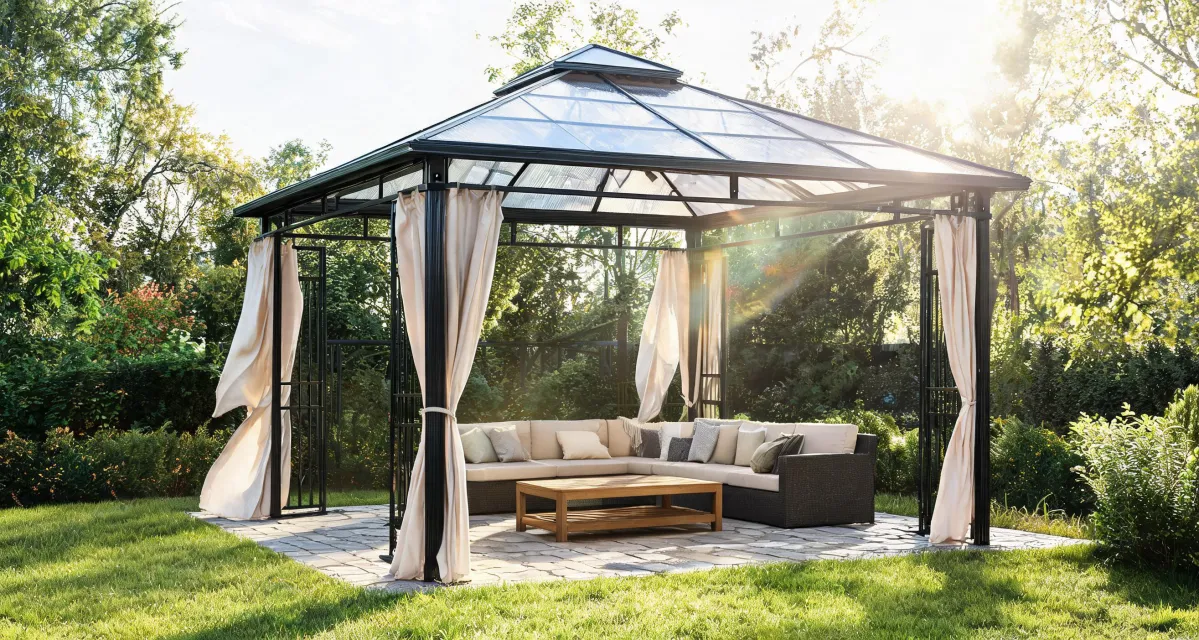
Imagine this: you spent last summer watching a $90 pop-up canopy wobble in every breeze and finally snap its poles in a July thunderstorm. Now you're back in the market, and the choice looks deceptively simple—order another disposable shade structure, or step up to the Sojag Messina 10 x 10 ft., a permanent aluminum gazebo that costs several times more and demands a solid anchoring job. Which one actually lasts? That question is the real decision, and it has nothing to do with canopy color or a headline discount. The answer lives in the frame, the anchoring system, and the support you can count on after the box arrives. On one side stands a familiar low upfront price; on the other, a structure designed to stay put for multiple seasons. The dilemma is whether the extra money buys genuine durability—and whether that durability depends on your wind zone, your ability to anchor it properly, and the weather protection you actually need.
The 10x10 Dilemma: What Are You Really Solving?
Picture this: you spent last summer watching a $90 pop-up canopy wobble in every breeze and finally snap its poles in a July thunderstorm. Now you're back in the market, and the choice looks deceptively simple—order another disposable shade structure, or step up to the Sojag Messina 10 x 10 ft., a permanent aluminum gazebo that costs several times more and demands a solid anchoring job. Which one actually lasts? That question is the real decision, and it has nothing to do with canopy color or a headline discount. The answer lives in the frame, the anchoring system, and the support you can count on after the box arrives. On one side stands a familiar low upfront price; on the other, a structure designed to stay put for multiple seasons. The dilemma is whether the extra money buys genuine durability—and whether that durability depends on your wind zone, your ability to anchor it properly, and the weather protection you actually need.
Here's the part most shoppers skip: the frame is the gazebo. A weak frame turns a beautiful shade structure into a wind hazard the first time gusts hit. The Messina's aluminum frame gives it a stiffness that portable canopies can't match—aluminum doesn't rot, doesn't rust, and holds its shape under load. But even the strongest frame is only as good as its connection to the ground. If you bolt it to a flimsy base or skip the anchoring kit, a 10x10 canopy becomes a sail. The real question isn't whether the Messina is 'good'; it's whether your yard can make it work. Do you have a level concrete pad, or are you willing to install one? That answer determines whether you're buying a durable structure or an expensive tarp holder. Consider how much risk you're willing to accept. A pop-up canopy that costs $90 can be replaced without pain; a $500 gazebo that collapses in a storm damages whatever is underneath—and possibly your neighbors' property. So the stakes aren't just the cost of the unit; they're the cost of failure. The Messina reduces that risk with a sturdier frame, but it doesn't eliminate it. The frame's strength only matters if the whole system—frame, base, anchors, and site—works together. So before you compare prices, ask yourself: what happens on a windy night in your specific location?
What Sojag's Support Network Actually Buys You
One of the quieter advantages of the Messina is what sits behind the brand. Sojag is part of ShelterLogic, which describes itself as a leading provider of outdoor products and solutions. On its official pages, the company highlights US-based customer support available seven days a week, plus a replacement cover finder and a floor frame kit finder. That's not just marketing noise—it's a support ecosystem that most budget canopy brands simply don't have. When you buy a gazebo, you're also buying the ability to get a replacement canopy when the sun fades the fabric, or a floor kit when you want to firm up the base. This matters because a 10x10 gazebo is a long-term purchase; the frame will outlive the cover. Having a clear path to spare parts and a human on the phone changes the calculus. It also signals that the company expects you to own this structure for years, not months. This support only matters if you actually use it, but having the option is a tangible difference from a nameless import canopy.
Think about what that support actually buys you. The official pages include the same 7-day US-based support line and the replacement cover tools—so those promises are consistently present across the site. The practical effect: if a storm rips your canopy after two summers, you don't have to shop for a generic cover that may not fit; you can find a made-for-Messina replacement. If you need to secure the frame on an uneven base, the floor frame kit finder points you to a compatible solution. But this support only helps if you use it before problems appear. It can't fix a bad installation or a frame that was never anchored. So when you weigh the Messina against a cheaper alternative, ask yourself: in three years, will the other brand still offer a replacement canopy? Will it even exist? The Messina's support network is a hedge against that uncertainty.
Where the Messina Lands in the Value Tiers
Where does the Messina sit in the 10x10 market? It's not a cheap portable canopy, and it's not a premium luxury pavilion. It occupies the middle tier: a permanent frame with a reasonable price. Sojag's official site occasionally promotes 'up to 60% off select Sojag structures' during limited-time sales, and that kind of discount can pull a mid-tier gazebo into budget territory. But here's the catch—that 60% figure applies to select models and seasonal promotions, not to every unit on every day. You can't assume the Messina will always be discounted; you have to check the current price. If you catch it on sale, you're getting a frame-backed structure for only a little more than a disposable canopy. That's the sweet spot. If you pay full price, it's still a fair deal, but the urgency to buy now disappears. The common mistake is assuming all 10x10 gazebos perform alike; in reality, the frame material and support ecosystem matter more than canopy color or a headline discount.
The same official pages show a rotating set of promotions: 20% off Arrow carports, a 25% price drop on ShelterTech, and the headline 'Gazebos, Solariums and Carports are up to 60% off.' These numbers tell you that Sojag's parent company runs aggressive seasonal sales, but they don't tell you which specific products are included. That means the Messina's real price depends on timing. A smart shopper tracks the listing for a few weeks, watches for the seasonal sale, and only then decides. The question is whether the discount is worth waiting for. If a storm season is approaching, paying an extra 10% now may be smarter than saving 30% and risking damage later. So ask yourself: what's your timeline, and what's the cost of waiting? A delayed purchase can mean a summer without shade, but a rushed purchase can mean a structure you can't properly anchor.
Before You Buy: Anchor, Base, and Wind Reality
The Messina's performance hinges on installation, not just the frame. Sojag's product ecosystem includes floor frame kits and roof strengthening kits—accessories that address the two most common failure points: a base that shifts and a roof that lifts. A floor frame kit spreads the load across a wider footprint, which keeps the frame square and stable. A roof strengthening kit adds extra resistance to uplift, which is what destroys gazebos in wind. These options are meaningful because a 10x10 gazebo is only as permanent as its foundation. On a bare lawn, the frame can sink or tilt; on a wood deck, you need proper mounting hardware. That's why the brand offers those tools: they exist to close the gap between a box and a stable structure. Without them, a gust of wind can turn a pretty gazebo into a tattered frame. Understanding your site before you buy is half the installation battle.
Before you order, make a checklist: measure your patio or deck, level the ground or plan a concrete pad, and identify the wind zone for your area. The official pages repeatedly mention the same support infrastructure—replacement covers, floor frame finders, and US-based help—so you know the brand expects you to plan ahead. If you skip the base, even the best aluminum frame will wiggle loose. If you ignore wind ratings, you're gambling with a structure that could become a projectile. The checklist isn't about the gazebo's specs; it's about your property's reality. A few hours of site prep now can save you from replacing a damaged frame later. Ask yourself: can you anchor the feet to a solid surface within a day of assembly? If not, the Messina isn't the right choice—yet. This is where the decision framework pays off: it forces you to confront the conditions before the price. Better to wait until the site is ready than to stress-test a weak installation.
The Decision Rule That Survives the Marketing
Put it all together and the decision rule is simple: choose the Messina if you have a flat, anchored site and you're in a moderate-to-low wind zone; choose a portable canopy if you need flexibility or you're renting. The Messina's aluminum frame and support network justify its price only when you can commit to a permanent installation. If you can't anchor it, every advantage disappears. The rule also accounts for the brand's promotional timing: buy during a sale if the calendar allows, but don't let a discount override the fit of your site. This rule survives marketing because it's based on conditions you can verify—your yard, your wind exposure, and your willingness to maintain the structure.
Here's the one-line verdict: the Sojag Messina 10 x 10 ft. is a strong mid-tier buy for homeowners with a level, anchorable base and a realistic view of their weather; it's a poor value for anyone who can't provide that environment. The thesis holds: the frame and anchoring system determine the gazebo's real lifespan, not the headline discount. The rule encodes the evidence we've walked through: the brand support, the promotional timing, and the installation conditions are all upstream of the purchase itself. If you can check those boxes, the Messina will serve you for years with the backing of a brand that answers the phone. If you can't, save your money for a cheaper shade solution and upgrade when your site is ready. Use it as a checklist, not a slogan. That's the decision rule—apply it to any 10x10 gazebo, and you'll avoid the most expensive mistake: buying structure you can't support.

Ingrid Falk
Ingrid Falk is an outdoor living products analyst specializing in fences, pergolas, gazebos, canopies, greenhouses, shade sails, patio sets, outdoor sofas, and weatherproof cushions. She uses ISO 4892-2 and ASTM G154 weathering methods while comparing UV color change, coating adhesion, corrosion resistance, frame load, joint stability, water shedding, and dimensional movement. Her work helps garden retailers, project buyers, and hospitality operators select structures and furniture suited to wind exposure, climate, installation method, maintenance, and expected occupancy.